
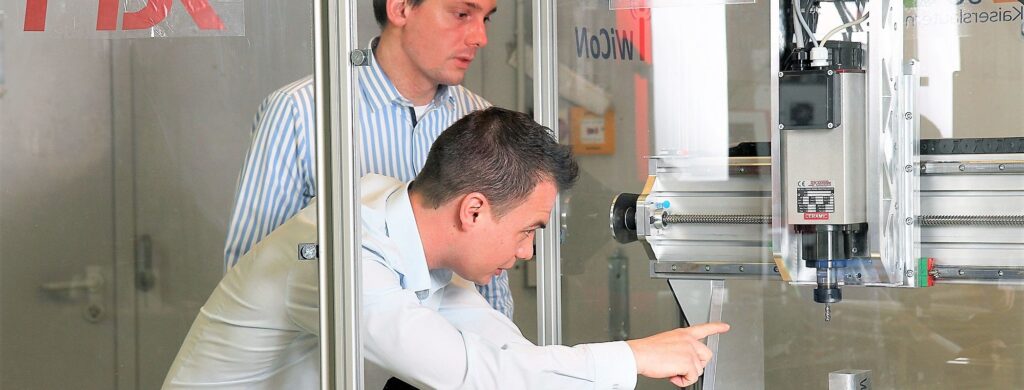
"The hardware for 5G manufacturing solutions will be on the market in two to three years," predicts Jan Mertes from FBK Kaiserslautern. The production research assistant is one of the leaders of the "5G Kaiserslautern" project aimed at exploring different use cases for 5G. "This will enable many more companies to make their production more flexible because it allows them to save considerable amounts of time, effort and costs compared to current practice." "Industrial manufacturing is shifting towards small batch sizes and customized products. In the future, the 5G mobile communications standard may make this a realistic proposition for smaller companies, too, including those that would otherwise not be able to afford the switch to modular manufacturing," says Mertes. Furthermore, it will make the use of applications such as (de)centralized wireless control, sensor-based monitoring and even automated guided vehicles (AGVs) much easier and cheaper. At present, however, there are still some challenges to overcome in making the transition to flexible production.